
The complete guide
Wooden geometric shapes: what to look for before you buy
Wooden shapes are one of those learning tools that keep earning their place on the shelf, long after the noisy plastic toys have been put away.
What you are buying
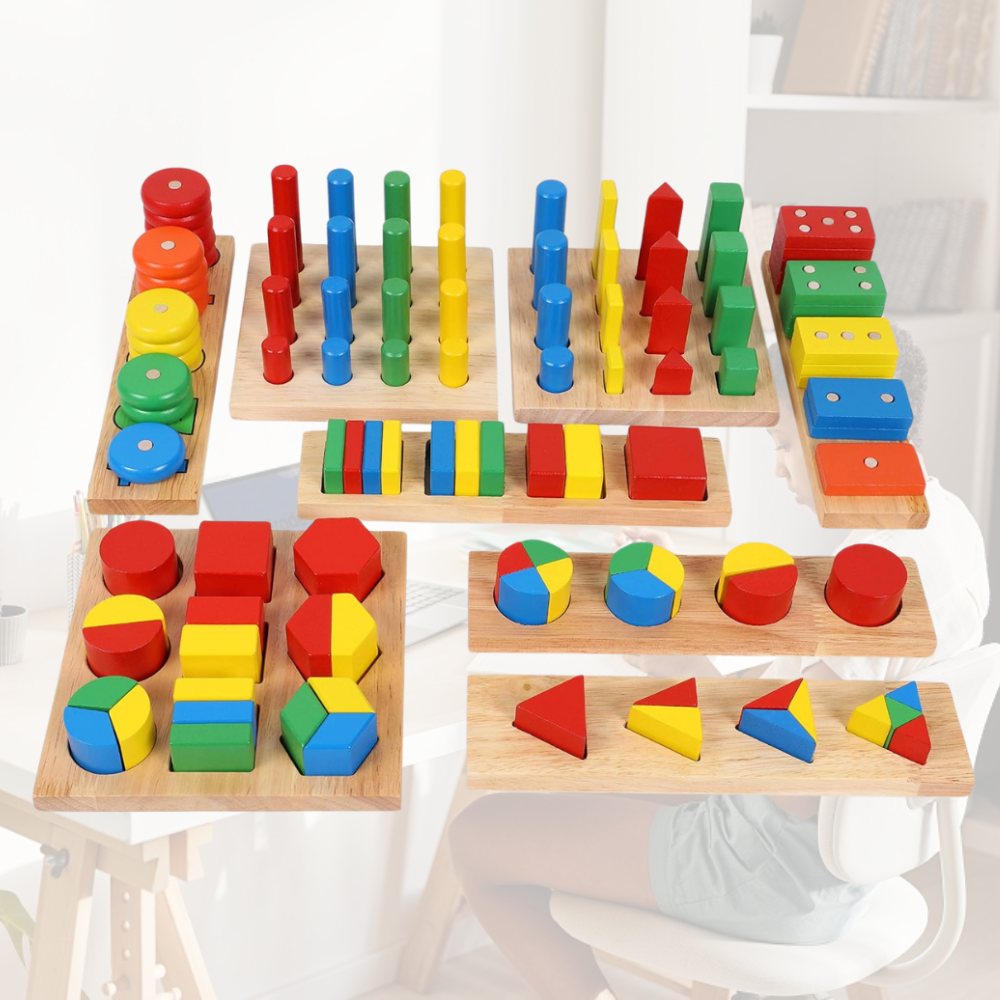
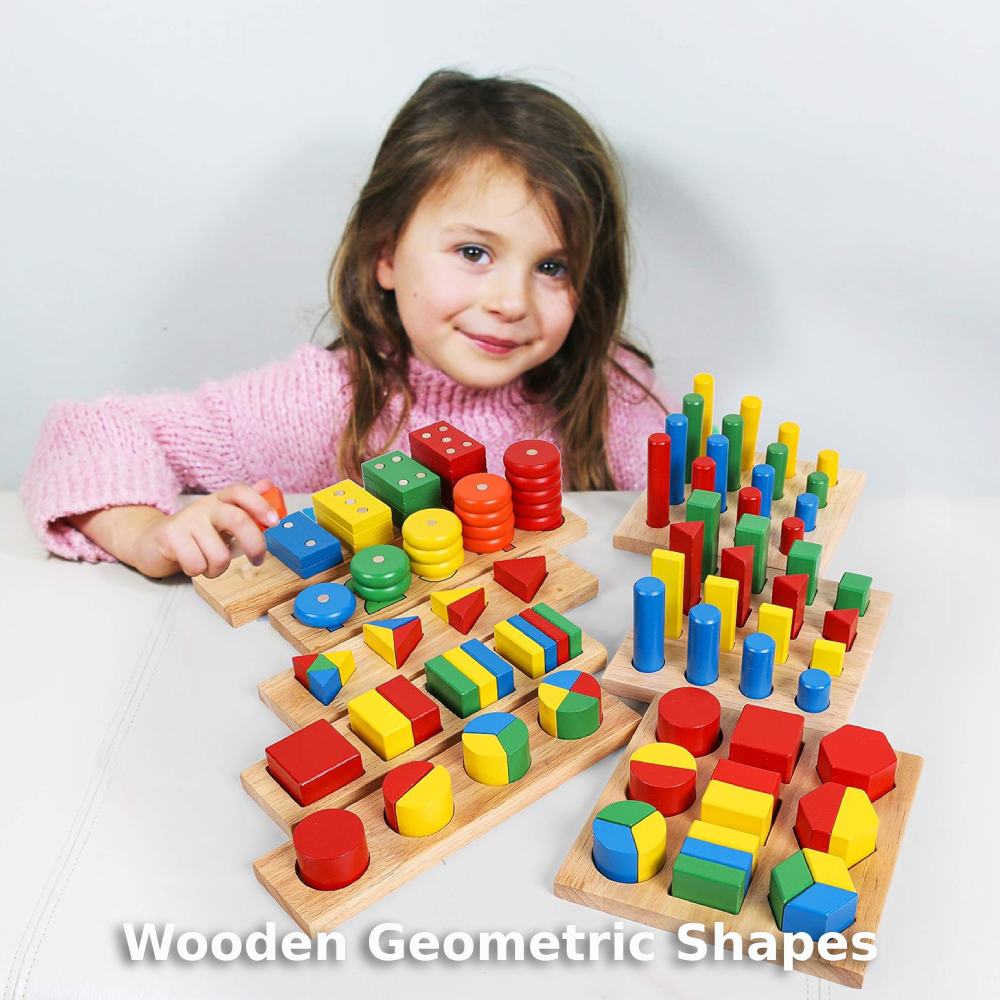
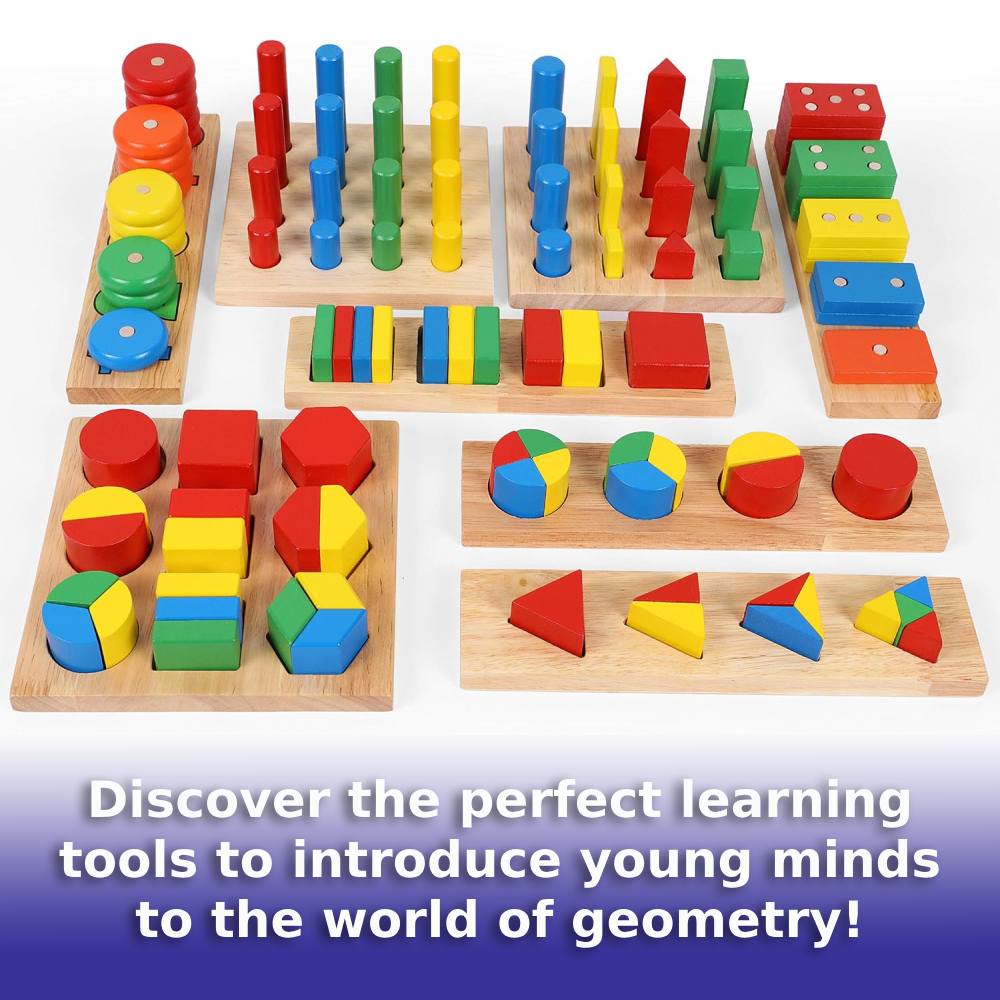
This is an 8 in 1 wooden stacking and sorting set. In the box you get a sorting and stacking set of geometry shapes, stacking rings and fraction boards, all in solid wood.
The shape sorting puzzle boards cover circle, square, rectangle and triangle. Each shape is also cut into fractions, so a child can hold a whole, a half, three quarters and a quarter and see how they fit back together.
Why wood suits early maths
The natural texture of wood invites touch, and children learn better when their senses are involved. Wooden shapes feel warm and steady in the hand compared with synthetic toys.
Working with solid shapes also helps children picture and move things around in their heads. That kind of spatial thinking sits underneath early STEM learning, and it even helps with reading.
Wooden toys tend to last, and this one is described as durable and long lasting. Good value for money, and kinder to the planet than another plastic set.
Ways to use it at home or in class
There are plenty of activities you can build around a set like this. Try a shape hunt: give each child a wooden shape and ask them to find a real object that matches it, like a can that looks like a cylinder.
Build and balance works well too. Ask children to stack different solids and see which combinations stay up. That gets at centre of gravity and balance without anyone having to say the words.
Draw and match is another good one. Trace around a 3D shape to see its flat faces, which connects squares, circles and triangles to their solid versions.
Then there is mystery shape guessing. Put a shape in a bag and let a child feel it and name it before they look. It sharpens both touch and shape recognition.
Making it last as your child grows
Start simple with a 3 year old: one board, one set of shapes, sorted by eye.
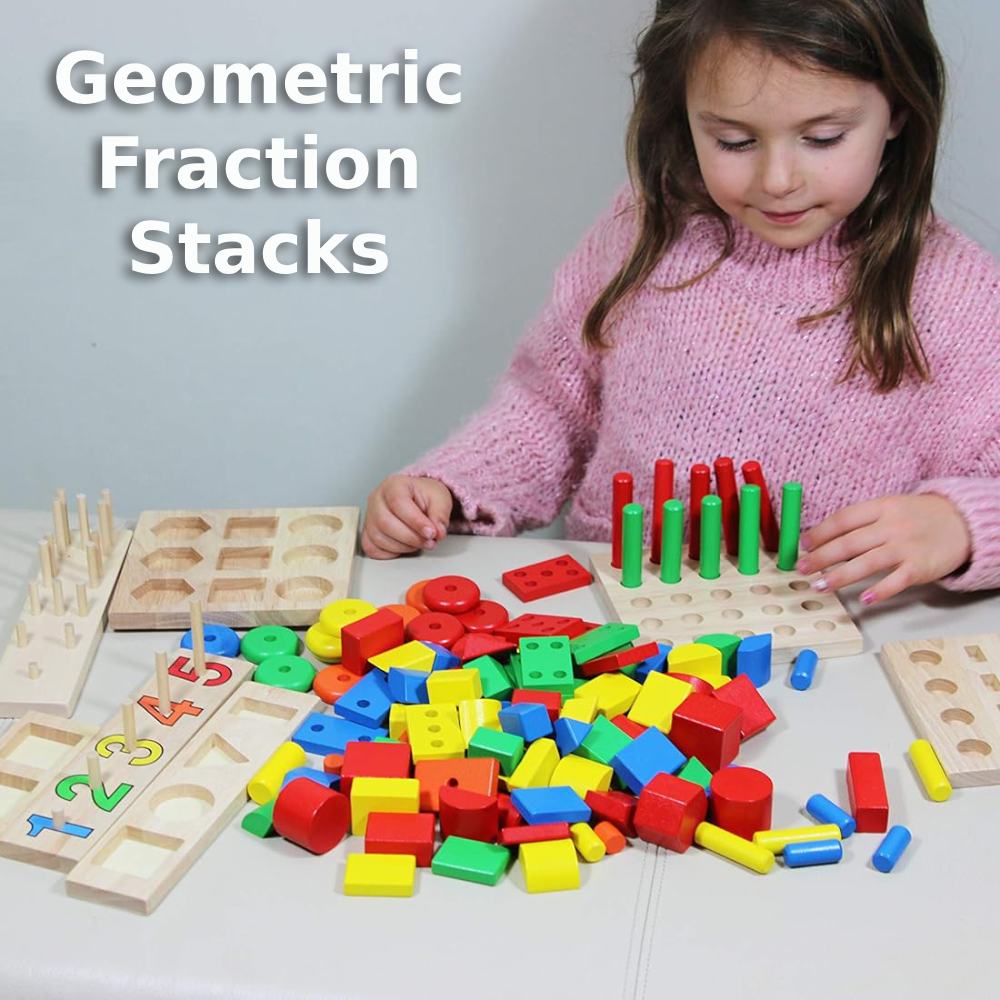
When they are 4 to 6, mix all the wooden shapes and rings together and ask them to match the correct shape and size to the right slots and pegs. Same set, much harder problem.
Along the way children pick up faces, edges and vertices, the difference between 2D and 3D, symmetry and balance, and how to compare sizes. Those are ways of thinking, not just facts to learn.
Still not sure whether it fits the age you have in mind, or how it would work alongside what you already own? Email the support team before you order and we will come back to you, usually within one business day.